Lampire Biological Laboratories Cuts Ribbon on New Facility

by Harry Zimbler – Pennsylvania Business Central

$2-million bioprocessing lab now open

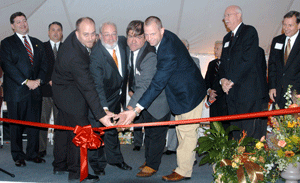
EVERETT – Lampire Biological Laboratories celebrated the opening of its new $2-million bioprocessing lab Oct. 26. The ribbon cutting brought together hundreds of well-wishers, including political and biotechnology leaders from state and federal institutions. Led by its president Gregory Krug, Lampire expects to continue to serve as a strong anchor for the growth of the biotechnology industry in Bedford County and the central Pennsylvania region.

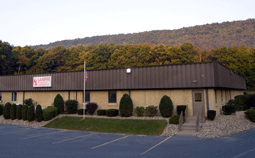
According to Krug, the new facility – located in Everett – will employ 30 and bring the company’s Bedford County employment to 70 in 2008. Annual payroll will top $2 million. The 18,000 square-foot lab formerly housed a textile-manufacturing plant.

Lampire, headquartered in Pipersville, is an international supplier of products that serve the life sciences industry. Included in its products are antibodies, serum, and tissues that are used in many lifesaving medical tests and products. For example, Lampire materials are used to detect prostate cancer and determine pregnancy, among many other uses.

On hand at the ribbon cutting ceremony were U.S. Rep. Bill Shuster; James greenwood, president and CEO, Biotechnology Industry Organization; and Dennis “Mickey” Flynn, president, Pennsylvania Biotechnology Industry Organization; among many others.

“Lampire is a wonderful example of what happens when public and private groups work together,” said Bill Shuster. “Biotechnology is the bedrock of America’s strength. We hope more life-science companies will come to see what we have to offer here. Today, 40 percent of Lampire’s workforce is here in Bedford County. We expect that to increase.”

James Greenwood explained how competitive the biotechnology industry has become. “More than 20,000 people came to our (national) conference,” he said, “representing every state and many nations. They are all trying to attract biotech companies. And you have an excellent one here in Bedford County. Biotech envisions a world free of disease, free of hunger.”

Mickey Flynn echoed Greenwood’s observation. “Here in Pennsylvania there are 1,750 bio-tech establishments,” he noted. “They have 30,000 employees and 325,000 people involved as suppliers to their industry. The industry is relatively young, with lots of potential for growth. We thank Greg Krug for his commitment to the industry.”

Former Congressman Bud Shuster commented on the excitement of the day’s activities. “It is wonderful to know that this extraordinary company is growing in Bedford County,” he said, “It is on the cutting edge of the future.”

Alan Sell, former director of the Bedford County Technical Center and current assistant superintendent of Bedford Area School District, stated that Lampire and Bedford County’s agricultural heritage is a perfect match. “With the help of Greg Krug, we have been able to leverage $200,000 in grants,” he said. Sell also noted that Krug was instrumental in helping to create the new ag-biotech program at the BCTC.

“Our success is all about out people,” said Krug. “Biotechnology is about living things. It’s about people who care about the products they make. We are happy to bring a life-science company to Bedford County. We were welcomed here with open arms. The Bedford County Development Association has been an enormous help. Our industry is in its infancy. We are so lucky to be able to watch it grow.”

Krug explained that the new bio-processing facility opens up a wide variety of new possibilities for the company. “This facility has been designed and built to allow us to take manufacturing from raw materials to finished products. We’ll have more senior scientists here in Everett using the most advanced equipment in the industry…”

Sen. John Eichelberger (R-30) was on hand to present Lampire with a citation from the Pennsylvania Senate celebrating its achievements over the past 30 years, and its expansion in Bedford County. Rep. Dick Hess (R-78) brought the same congratulations.
Scientist grows biotech empire from local farm

by Kathryn Finegan Clark – Bucks County Herald

Gregory F. Krug’s Lampire labs supply antibodies from sheep’s blood

The thing to remember about Gregory F. Krug, president of Lampire Biological Laboratories, Inc., is he’s an entrepreneur-scientist, a man who knows as much about growing a business as he does about growing live cells.

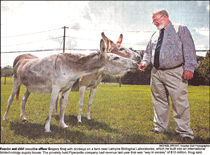
An absolute whirlwind of ideas and activities, Krug, 53, has not turned a sow’s ear into a silk purse yet. But he has created a biotech supply empire from sheep’s blood, with annual revenues exceeding $10 million. “It’s not about me,” he said. “It’s about my employees. I couldn’t do this without them.”


Lampire supplies antibodies, animal blood products and other items to the pharmaceutical and biological testing industry and employs 130 in various facets of the work.


Two facilities are in Bucks County. Corporate headquarters and a 40-acre farm share an Ottsville address and Lampire’s biotech research and resource center is in Pipersville.


A processing laboratory is located in Coopersburg, Lehigh County, and a 400-acre farm is situated in Everett, Bedford County. A ribbon-cutting took place Oct. 26 for the $2 million Everett Bioprocessing Laboratory at the Everett Business Park. Among the speakers was James C. Greenwood, former Bucks County congressman, president and chief operating officer of the Biotechnology Industry Organization (BIO).


Krug said, “We’re a supplier of raw materials. What coal is to the steel industry, we are to the diagnostic, biotech and pharmaceutical industries.” The materials his company produces, the animal blood, antibodies and cell-culture devices, are used by pharmaceutical and biotech companies, research labs, manufacturers and universities, and are necessary for medical research to continue its march forward. Krug declined to discuss revenues, but published reports have set them in excess of $10 million annually.


“We’re not just a lab that supplies blood,” Krug said. “We’re a custom-house. We produce hundreds of products for our clients.” Krug is particularly proud of one of his newer products, a cell-culture bag that can be used to grow cells and produce antibodies. He said, “We can grow stem cells and cancer cells in these and we think one day we may be able to grow organs in them.”


As a supplier of antibodies for medical tests, Lampire plays a behind-the-scenes role in testing for pregnancy, drugs of abuse, infectious diseases, E.coli and salmonella contamination and even anthrax.


Lampire antibodies are also used to develop cancer drugs. “Now,” said Krug, “we can even test to determine if a person has suffered a heart attack or a stroke.”


Krug’s story, and Lampire’s, begins in 1976 when he was a junior at Delaware Valley College and a student of Dr. James Diamond, now dean of agricultural and environmental sciences at the school.


Diamond, who had a sheep farm, was trying to make his business more profitable. He knew sheep’s blood, which shares certain characteristics with human blood, was used for scientific testing, a market he wanted to tap.


Diamond knew where all the sheep farmers were in the eastern part of the state, and Krug began collecting blood for a New Jersey laboratory. One lab ordered a year’s supply of blood to use in detecting disease. The following year, Krug, working with a partner who subsequently left the business, leased two farms and started to raise his own animals, and he was off and running. He continues to maintain closed herds to avoid the risk of outside disease and contaminant. Feed, forage and water are tested routinely.


The company has now broken into global status, and Krug was named 2006 SBA Small Business Exporter of the Year for eastern Pennsylvania as well as the Mid-Atlantic Region. Lampire’s customers include Bristol-Myers Squibb Co., Pfizer Inc., Schering-Plough Corp. and Wyeth and Abbott Laboratories.


Working with those companies has also placed Lampire in a position to do business globally. Direct export to Europe, Japan, Australia, New Zealand and Africa accounts for about 40 percent of the company’s revenue. Government contracts, including those with the Center for Disease Control and Prevention, The National Institutes of Health and the Food and Drug Administration, have contributed to the company’s growth.


Lampire’s Biotech research and Resource Center in Plumstead Township is a 12,000 square-foot building with clean-room manufacturing and testing laboratories and cell-banking services in addition to tissue culture and purification laboratories. It is an impressive, sterile environment and visitors must wear booted and hooded suits to prevent outside contamination.


Todd Otto, operations manager at the biotechnology center, said the sterile conditions are monitored constantly. He said, “Once we noticed there was a peak in contamination on our monitor and we finally discovered it had to do with the people tracking mulch into the building so we had the mulch replaced with pebbles and that solved the problem.”


Otto said all the cleaning is done in-house and, in fact, he uses the same water used in injectibles to clean the floor to ward off any possible contamination.


Facing off the sterility and no-nonsense white-walled environment of the interior are handsome statues and colorful flowers and shrubbery surrounding the building. All the greenery is grown on Lampire’s farms, and Andrew Stednitz, the company’s packaging engineer, sculpted all the statues.


Krug said, “We got into raising our own plants indirectly as we were looking into producing antibodies in plants; however, we did not move forward with the project but decided to put the greenhouse to use. We have found it enables us to have better control over our floral designs for the facilities, and is an activity which many people in the company take part in, a diversion from day-to-day production and everyone enjoys it.”


Otto said training a new employee can take as long as two years. “And then some of them leave,” said Krug, philosophically expressing a common workplace headache, “but some of them have come back, too.” One scientist, Krug said, commutes daily from the Jersey Shore and another from Delaware. He adds proudly, “I have the kind of employees who will even come in off-hours and on weekends to check on a project.” Lampire pays competitive salaries and offers a comprehensive benefits package, which includes a 401K plan and profit sharing.


Krug’s company also reaches out to the community, taking part in local activities and sponsoring science projects at schools. Four Pennridge High School students last year completed a project related to hand-washing and the spread of disease and won national and regional contests along with thousands of dollars in prize money.


Someday one of them may work at Lampire.


What’s in a name?


“It’s pronounced Lampire, as in vampire, and there’s a reason for that,” said Dr. James Diamond, dean of agricultural and environmental sciences at Delaware Valley College, who was involved in the company’s earliest days.


In the 1970’s, Diamond who was getting ready to start work on his Ph.D. at Penn State, was seeking ways to make his sheep blood farm more profitable, at least profitable enough to cover the taxes on his farm in Nockamixon Township. He sold lambs, he sold the sheep and he sheared them, but the return still wasn’t high enough.


So he worked with Krug to find a way to procure the blood but still keep the sheep alive and well. They discovered sheep could be bled once every eight weeks without ill effects if they were fed a supplemental diet.


Diamond said, “I found the farmers and Greg went around and collected the sheep’s blood, often at night and in pasture by lantern light.” One farmer watched them one night as Greg was bleeding a lamb and remarked, “I know what you guys are, you’re lampires.”


“The word just seemed to hang on and it’s the name Greg eventually adopted for his company.”


Diamond said, “Greg is an amazing, unique man. He took a concept, ran with it and turned it into a multi-million-dollar company without having to take it public.

Everett laboratory to create 100 jobs

by Wendy McCardle – Altoona Mirror

EVERETT — Using state-of-the-art equipment to produce tests to detect abnormalities such as colon cancer or drug use, Lampire Biological Laboratories has had an effect on thousands of people around the world. Now, as the company marks its 30th anniversary, the unveiling of its Everett Bioprocessing Laboratory gives the local community another reason to celebrate. A ribbon-cutting ceremony was held Friday for the $2 million project, which began with gutting a former textile manufacturing plant at Everett Business Park on Route 26. From there, the space was transformed into an 18,000-square-foot facility that will be used for immunochemistry services, processing and packaging blood products and manufacturing diagnostic reagents and controls. More importantly to Bedford County residents, however, is the 100 senior scientists, technicians, support and administrative personnel jobs created with the laboratory opening. Lampire will have a $2 million payroll in the county, as well as $8 million worth of company investment in the area. Among speakers and presenters Friday were former congressman Bud Shuster; U.S. Rep Bill Shuster, R-9th District; county Commissioners Steve Howsare, Michael Shaffer and Glenora Faupel; James Greenwood, president and chief executive officer of Biotechnology Industry Organization; and Dennis ‘‘Mickey’’ Flynn, president of the Pennsylvania Biotechnology Industry Organization. Allen Sell, assistant superintendent of Bedford Area School District and former director of the Bedford County Technical Center, spoke about the company’s impact on the local education system. ‘‘The connection of our agricultural heritage and the cutting-edge technology was a perfect match,’’ Sell said.

Students from the tech center’s biotechnology program toured the site, which includes walk-in freezers and several laboratories.

State Rep. Dick Hess, R-Bedford, read a citation from the state House and thanked company President Gregory Krug for “improving the quality of life” in Bedford County.

“I applaud them for their hard work and steadfastness over the last 30 years,” Hess said of Krug and other company officials.

State Sen. John H. Eichelberger Jr., R-Blair, echoed Hess’ sentiments.

“I’m very proud of what he’s doing here,” Eichelberger said. “I wish him and everybody at Lampire the very best.”

An emotional Krug, choking back tears, said it wasn’t about him.

“It’s not me,” he said. “It’s not us. It’s many. It goes deep.”

Krug said the county has welcomed the company with open arms and has provided him support, as have state officials, his mentors and family members.

He also said the work done at Lampire can change the lives of thousands of people.

“To know that the things you’re touching are touching human life somewhere is so important,” he said. “The road that we’re starting is opening up new doors.”

For more information about Lampire, visit www.lampire.com.

Mirror Staff Writer Wendy McCardle is at 946-7520.

LAMPIRE Biological Laboratories celebrates 30 years

by Karen Smithmyer – Bedford Gazette

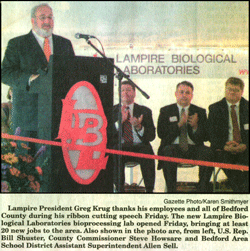
EVERETT — Friday was a special day for Lampire and its employees. Not only did the company mark its 30th anniversary, they also cut the ribbon on their new 18,000 square foot bioprocessing laboratory.

Lampire Biological Laboratories, located within the Everett Business Park along Route 26, is an international supplier of biological reagents in the life science industry. Started in 1977 by Greg Krug and Craig Tarler, Lampire first moved to Bedford County in 1989 with a 125-acre farm south of Everett with three employees. Today, that farm has expanded to 400-acres and 30 employees. According to President Krug, Bedford County has given his company more than he imagined it ever could. “We came to Bedford County looking for farmland and an agricultural workforce. We found an exceptional workforce and a supportive economic development climate that has encouraged us to expand operations here in Bedford County,” Krug said. Although many people saw the ceremony as a celebration for Krug, he disagreed.

“Today is not a Greg day, it’s really about all the people who work here and everyone who made Lampire happen in Bedford County.”
“It’s all about you guys,” Krug said.
“The $2 million bioprocessing lab is a way to bring more jobs to the county,” he said. Currently Lampire employs 120 professionals, 50 of them in the county. That number is expected to expand to 70 by early 2008, Krug said.

One of the founders of Lampire, Tarler, said Krug is more of an entrepreneur than a businessman. “There are two meanings of entrepreneur: the first only cares about fast expansion and making money. The second cares about the community and the environment in which they work. Greg is the second. He cares more about his workers and the community than he cares about making money,” said Tarler, president of Cornell and Diehl, Inc.

More than 200 people attended the ribbon cutting and anniversary celebration, including local, state and federal officials.
James Greenwood, president and CEO of the Biotechnology Industry Organization from Washington D.C., said Bedford County should be proud of itself. “We have conferences every year with companies from all over the world trying to convince people to set up biotechnology centers in their communities. Bedford County won,” Greenwood said.
He related biotechnology labs as people trying to create a world free of disease, hunger and pollution. “Really, these people here are trying to create a world for their children.”

Not only does Lampire’s presence in Bedford County increase jobs, it also increases awareness for many high school students.
Bedford Area School District Assistant Superintendent Allen Sell said Lampire is responsible for developing agriscience in area schools. “Agriscience enables students to work in the bioscience field, and the connection between agriculture and Lampire’s biotech was a perfect match,” Sell said. He helped to form the new agriculture-biotech curriculum as director of the Bedford County Technical Center last year.

Krug said he never saw a growth this large for his company 30 years ago. “It’s been an exciting and emotional 30 years and I’ve been fortunate enough to sit on the top.”
“We’ve had a run like you wouldn’t believe, thanks in part to all the support Bedford County has given us over the years,” Krug said. Bedford County boasts nearly 50 percent of all Lampire employees, with that number expected to increase early next year.

Along with a ribbon cutting ceremony, attendants had the chance to tour the new laboratory. Vice President of Technical Development Alan McNally explained in general terms all the different labs Lampire has. The easiest way to explain what Lampire does, he said, is to compare it to giving vaccines to babies. “We develop different antigens from animals that can be used to combat and cure diseases,” McNally said.

He also said the new lab will provide a one-stop shopping center for clients. Instead of taking the antibodies and shipping them to different labs for research, everything can be done at the new biotech lab. Antibodies are proteins found in blood or other bodily fluids, and are used by the immune system to identify and neutralize foreign objects, such as bacteria and viruses. Through this research, scientists can formulate vaccines and other methods of combating disease.

The new building features centrifuge labs, which separate materials into different components, sterilization labs, which are used to purify and sterilize the air when specific products are grown; and di-filtration labs, which take something from one state and change it to a new state.
The centrifuge labs are important, McNally said, because they allow scientists to break down materials so specific components can be used for an experiment. “Here, we take out what the client wants, usually serum or plasma, and can transfer it to the next lab. Sterilization labs are vital for producing a lock and key system,” he said. “In here, we are able to produce one specific “key” that can be used in the body to “unlock” an antibody or something else. In the body certain bacteria and things only work with one other thing; here we’re producing that other thing,” McNally said. This lock and key process is used often in biotechnology, McNally said, although most people just aren’t aware of it. “Many people don’t really know what we do in biotechnology, but an easy example is the lock and key system.” “It works exactly the same way a pregnancy test works. You have a “key” that tries to detect a “lock”. If there’s a lock present, then you’re pregnant.”

The $2 million bioprocessing laboratory was partially funded through the state and federally supported financing. It sits on five acres and is part of the Keystone Innovation Zone, which provides tax incentives to companies under 8 years old.
According to Krug, Lampire has invested $8 million in the Bedford County lab.

“The Bedford County workforce is a powerful group and I’m so glad to be a part of the community,” he said.


Ribbon Cut for $2 million Bioprocessing Laboratory

October 26, 2007 EVEREETT, PA — More than 200 local, state and federal officials and guests celebrated Lampire Biological Laboratories 30th anniversary and the ribbon cutting for the company’s new Bioprocessing laboratory in Bedford County. By early 2008 the $2 million state-of-the art facility will employ 30, bringing the company’s 2008 employment in Bedford County to 70 and supporting a $2 million annual payroll.

The company, with headquarters in Pipersville, PA, is an international supplier of biological reagents serving the life science industry. Since its founding in 1977, Lampire has grown to more than 120 professionals offering expertise in cell culture, control reagent manufacturing, quality assurance, product development, veterinary science and animal husbandry.

“We came to Bedford County looking for farmland and an agricultural workforce,” said Lampire President Gregory F. Krug. “We found an exceptional workforce and a supportive economic development climate that has encouraged us to expand operations here in Bedford County.” Krug credited the Bedford County Development Association and its President Betty Slayton with being aggressive and creative in packaging economic development support for the company. “The support that has been accessed through BCDA’s efforts has been critical to the growth of our small, privately-held company,” Krug said. “Without that private-public partnership, our growth would not have been possible.”

The county’s exceptional workforce has been equally critical to its success in Bedford County, Krug said. “The dedication of our employees is second-to-none. In biotech, we’re working with living things that don’t operate on a 9 to 5 schedule. Our employees understand that and are committed to their work. It’s not about the hours, it’s knowing that the products the help manufacture are positively affecting human and animal lives throughout the world.”

The new Everett Bioprocessing Laboratory is housed in a former textiles manufacturing plant that has been gutted and expanded to its current 18,000 square feet. The new facility offers a wide range of bioprocessing capabilities, including immunochemistry services, processing and packaging of blood products and contract manufacturing of diagnostic reagents and controls. The facility is complete with large-capacity freezer and refrigeration storage, specialty cleanrooms, environmentally controlled air-handling systems and high tech communication. The entire facility is on backup generator systems and also has high security and monitoring systems.

Since opening its first 125-acre farm in Bedford County in 1989, Lampire has steadily expanded its operations in the county, investing more than $8 million.

Krug said the new bioprocessing center opens up a wide variety of new doors for his company. “This facility has been designed and built to allow us to take manufacturing from the raw materials to finished products. We’ll have more senior scientists here in Everett using the most advanced equipment in the industry and undertaking a wide array of product development.”

The materials Lampire supplies are used in products such as diagnostic reagents that detect prostate cancer, to determine pregnancy, to calibrate hematology analyzers and in other instruments and tests that detect illnesses. Lampire products were used in the research to develop the HemCon Bandage that is now supplied as basic equipment to all American combat soldiers, saving more than 100 lives because of its ability to seal bleeding wounds. The applications for the company’s products are varied and growing everyday.

In addition, Krug said he hoped the new facility will be the cornerstone for an expanding biotechnology sector in Bedford County. “We have a history of working with academicians and start-ups to create new products and nurture new companies,” Krug said. �We hope that in the future this facility will help establish Bedford County as a recognized center for biotechnology.” He noted that the Lampire facility’s designation as a Keystone Innovation Zone will make it attractive to new biotech companies to move to Everett.

Looking back over the 30 years since the founding of his company, Krug said he “never would have guessed” it would grow into an internationally known biotech company. “One of the big things that’s important is that it was fun when we started, and it remains fun today. We continue to try to be creative and are always searching for new opportunities to expand our products and manufacturing lines,” Krug said. “It’s a continual learning process.”

LAMPIRE Biological Laboratories celebrates 30 years with Ribbon Cutting of Bioprocessing Center

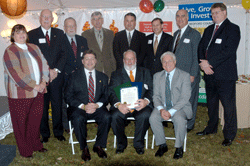
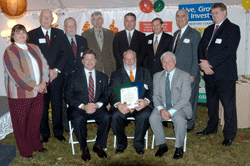
Lampire Biological Laboratories celebrated it 30th anniversary with a ribbon cutting ceremony on its new state-of-the-art Bioprocessing Center. More than 200 local, state and federal officials and guests celebrated the occasion. In attendance and participating in the ceremony was; Craig Tarler, President, Cornell & Diehl, Inc., Bud Shuster, Former U.S. Congressman, 9th District, James C. Greenwood, President & CEO, Biotechnology Industry Organization, Dennis M. “Mickey” Flynn, President, Pennsylvania Biotechnology Industry Organization, Dolores Kaplan, Deputy Secretary for Business Assistance Pennsylvania Dept of Community and Economic Development, Allen Sell, Assistant Superintendent, Bedford Area School District, Steve Howsare, Chairman, Bedford County Board of Commissioners, Bill Shuster, U.S. Congressman 9th District, Dick L. Hess, Pennsylvania Representative, 78th District, and John Eichelberger, Pennsylvania Senator, 30th District.

Chairman Howsare presented Lampire president Gregory F. Krug with a Proclamation from the Bedford County Commissioners’ Office. Representative Hess presented a Citation to Mr. Krug from the Pennsylvania House of Representatives and Senator Eichelberger presented a Citation from the Pennsylvania Senate.

“Today is really about all the people who work here and everyone who made Lampire happen in Bedford County.”
“It’s all about you guys,” Krug said.

Big in Biotech Supply

by Linda Loyd, Philadelphia Inquirer Staff Writer

From origins in a wrong turn, Lampire has built an empire.

Had Gregory Krug made a right turn instead of a left 30 years ago, his multimillion-dollar biotech supply business in Bucks County might never have happened.

In 1976, while a junior in animal science at Delaware Valley College in Doylestown, Krug made a wrong turn for a job interview. He ended up at a horse barn and veterinary clinic where owner Craig Tarler hired him to clean horse stalls.

The following year, the struggling horse farm was up for sale, and a New Jersey diagnostics firm, Clinical Sciences, approached Tarler about supplying $100,000 worth of sheep blood a year to use in agar culture plates that detect contamination or disease.

That’s how Lampire Biological Laboratories in Pipersville was born

From modest beginnings working from the back of a pickup truck and paying farmers to bleed their sheep at farms throughout eastern Pennsylvania, Lampire has grown into a global supplier of animal blood, reagents, antibodies and other products, including cell-culture devices used by pharmaceutical and biotech companies, research labs, makers of diagnostic tests and universities.

The privately held firm, with 130 employees, owns two farms and has operation in five communities in Bucks, Bedford, and Lehigh Counties.

Krug said Lampire’s revenue last year was “way in excess” of 10 million. The company is profitable, but Krug, who is president, will not discuss profits.

“Greg took hold of this company and grew it into a multimillion-dollar industry,” said James Diamond, dead of agricultural and environmental sciences at Delaware Valley College. “He is a success story beyond success stories and a very unique person.”

Thirty years ago, Diamond was a sheep farmer and a Bucks county vo-tech teacher. Lampire started with his sheep. Diamond knew where all the sheep farms were in eastern Pennsylvania, and he contacted the farmers.

In Lampire’s early years, Krug drove the sheep blood they collected to a New Jersey laboratory that used it in diagnostic testing. He worked in the lab between midnight and 6 a.m., pouring the blood into containers in a sterile environment.

“Animal blood was our base product,” Krug said. After a year, the company leased two farms and began raising its own animals.

Krug and Tarler built their first lab in Tarler�s garage, and washed glassware behind his kitchen. “It was a wild ride, a lot of funny stories,” said Tarler, who in 1979 turned the business over to Krug, who is sole owner.

Krug and Tarler have different remembrances concerning the Lampire name. Krug, 53, recalls that the idea came from a Lancaster County farmer who quipped, “You guys aren’t vampires… You are lampires.” referring to the men’s drawing sheep blood, sometimes by lantern light, at night in a pasture.

Tarler, 77, remembers that a boarder of horses at his horse barn jokingly called the sheep “your Lampire project, as a take-off on vampire. The ‘lam’ was a take-off on ‘lamb’. It was strictly tongue in cheek. We laughed so hard that it stuck.”

Tarler now owns a pipe tobacco manufacturing firm in North Carolina, but he remains close to Krug, whom he calls “like a fourth child to me.” Greg has done a tremendous job, and he’s done it all without having to take the company public.”

In 2006, the US Small Business Administration named Krug its small business exporter of the year for eastern Pennsylvania and the mid-Atlantic region. Krug was nominated by Univest National Bank in Souderton, which has been Lampire’s bank since the mid-1990s and which provided financing for the company’s expansion.

Joe Duerksen, Univest’s senior vice president of corporate banking, said Lampire became a “global player” and established relationship with many U.S. companies selling products in other countries. The U.S. customers also opened doors for Lampire to do foreign based companies, he said

About 40 percent of Lampire’s revenue comes from direct export of products overseas to Europe, Japan, Australia, New Zealand and Africa, and 60 percent to 70 percent of overall sales are to U.S. companies that do business oversea, the company said.

Customers include Bristol-Myers Squibb Co., Pfizer Inc., Schering-Plough Corp., Wyeth and Abbott Laboratories.

In the 1990s, Lampire began making monoclonal and polyclonal antibodies for medical tests to detect pregnancy, drugs of abuse, infections diseases, and contamination caused by E. coli and salmonella bacteria.

Lampire antibodies are used to develop cancer drugs and in diagnostic tests that can tell whether a person had a heart attack or stroke.

“We’re not just a laboratory that farms blood,” Krug said during a visit to his plant on Applebutter Road. “We are a custom house that makes products for clients,” including the National Institutes of Health, Center for Disease control and Prevention, U.S. Department of Agriculture, and academic institution, including the University of Pennsylvania. “We also work with the U.S. Military.”

Lampire’s newest product is a cell culture bag that can be used instead of a bioreactor to grow cells and produce antibodies. Krug said the bag has implications for growing stem cells, cancer cells. “We have grown tissue in here, and we think we can possibly one day grow organs in this bag.”

Lampire produces raw materials used in hundreds of health-care products. “What the coal mine is to the steel industry,” Krug said, “we are to the diagnostic, biotech and pharmaceutical industries.” Competitors include Covance Inc., Harlan, Scantibodies laboratory Inc. and Strategic Diagnostics Inc.

Denis ‘Mickey’ Flynn, president of Pennsylvania Bio, the industry group for biotechnology and pharmaceutical companies, said Lampire is one of 1,751 companies in the state “directly related” to the biopharmaceutical industry. He said Lampire products and service were “absolutely required and necessary” within the industry “to move research forward.”

Flynn said he works with Krug on education and economic-development issues in Bedford County and legislative issues in Harrisburg and Washington. “He’s not a one dimensional executive,” Flynn said. “He sees the need to reach out and be involved in the total community.”

Krug has helped high schools and technical schools in Bucks and Bedford Counties to establish agriculture biotechnology programs and curriculums, familiarize students with careers in science, and provide students internship.

Lampire recently supplied testing materials, equipment and staff support for a project at Pennridge High School in Perkasie on how proper hand washing might reduce the spread of disease. Four ninth grades won a national science, math and technology regional competition in March, and each received a $2,000 saving bond as prize money.

Lighting the Fire

by Joseph P. Ferry

As most life scientist will attest, growing cells in a laboratory can be a costly, time-consuming process with no guarantee of success. The hard plastic bottle used in most labs are expensive, take up lots of storage space, and need to be kept in constant motion to achieve optimal results.

Greg Krug, president of Lampire Biological Laboratories and 1977 Delaware Valley College grad, has come up with what he calls “an elegantly simple” approach to growing cells, a product that may eventually become the industry standard. Developed over four years in the company’s biotechnology facility in Pipersville, Bucks County and introduced into the market in January, 2006, the Lampire Cell Culture Bag is made of a proprietary ionomer plastic material that is so gas permeable that it allows the free exchange of oxygen and carbon dioxide, yet it is strong enough that it can be dropped directly into an incubator filled with liquid nitrogen. In addition to saving storage space, the bags are optically clear which means their contents can be examined under a microscope.

The result of Lampire’s innovation is a product that, according to independent tests, provides increased cell counts faster, at a lower cost, and with a reduced risk of contamination since the bags are disposable.

Already well-received among scientists, Krug, who founded Lampire soon after graduating from DelVal, predicts the bag will play a key role in stem cell and cancer cell research. Some day, it could also be used to grow human organs, he says.

“We’re very proud of the product,” says Krug. “We were looking for an economical way to grow cells simply and decided we could come up with our own solution.”

Such creative thinking is one reason Lampire has grown into a $10 million a year business that supplies a variety of animal blood products used in research and diagnostic applications. The company has about 100 employees, about 10 percent of them DelVal grads, working at six facilities.

In fact, the company was founded on an innovative idea. While pursuing his degree in animal science, Krug was working part time at an equine facility when owner Craig Tarler decided to sell.

After touring the facility, one prospective buyer decided he wasn’t interested in acquiring the complex but would be interest in buying defibrinated horse and sheep blood if Krug and Tarler could supply it. At the time, defibrinated blood, which is collected without the use of an anti-coagulant and is valued because of its purity-was hard to come by. Suppliers were loathe to share their secret for collecting the blood that way.

For Tarler, a former public relations and marketing professional with no real experience in the life sciences, it represented an entrepreneurial opportunity. For Krug, it was a scientific challenge.

Krug developed a crude process that involved a flask with marbles in it and an electric shaker. At one point, he tried using a sanding machine to perform that delicate shaking crucial to the process. After several tries, he finally came up with technique that wasn’t pretty but was effective.

Tarler eventually sold the farm and built a laboratory in his garage. With horses and sheep ear-tagged at several farms in Pennsylvania and New Jersey, Krug and Tarler made their rounds collecting defibrinated blood to sell to microbiological media producers.

After Krug graduated from DelVal, Lampire Biological Laboratories began to grow, supplying animal blood products from a variety of species including chicken, horse and cow serums used in diagnostic tests. Two years later, Tarler went back to the public relation industry and Krug took over the company. By 1982, Lampire had entered the immunology field, collecting antibodies that could be used in diagnostic tests.

One of the earliest uses for the antibodies was in home pregnancy test, a market that exploded in the early 1980s. The company also began supplying blood-related products used in immunochemistry, biotechnology, and drug discovery. Today, Lampire’s blood related products are in demand by companies that develop drug therapies, especially chemotherapy, and by the makers of analyzers that detect illegal drug use.

Lampire operates five facilities in three Pennsylvania counties. Its corporate headquarters and 12,000 square foot Biotech Research and resources Center are in Pipersville, Bucks County.

About five miles to the north, in Ottsville, the company operates a 40-acre farm where it raises horses, sheep, cattle and other animals that provide the blood donations. In its Coopersburg, Lehigh County, laboratory raw material are processed, including protein purification, bulk filtration, and antibodies. Bedford County is home to a 400 acre farm that produces custom anti-serum, bulk serum, and red cell production programs. Nearby, 18,000-square foot, state-of-the-art biotechnology facility.

In an industry where purity of process and exacting standards are a priority, Krug is almost fanatical about ensuring the company’s herd of donor animals is treated well. Lampire’s laboratories operate on an equally high standard, complying with all Food and Drug Administration, GLP (Good Laboratory Practices) and cGMP (current Good Manufacturing Practices.)

A self admitted “flag-waver for Pennsylvania.” Krug is a vocal proponent of growing the biotechnology industry in the state. As an active member of Pennsylvania Bio, the industry organization formed with funds from the state’s portion of the settlement with tobacco companies a few years back, he would like to see incentives provided to keep innovative products and companies from moving out of state. He favors a system similar to what is used in the horse-racing industry, which rewards home-grown winner s with bonus purses.

Krug is still active with DelVal, regularly appearing at Career Day, offering internships and working with faculty members to locate equipment. In 2006, he served on the focus group that looked at all aspects of the college’s operations.

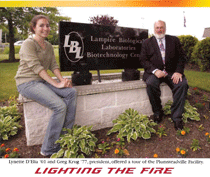
“I wanted to come back because this is my home,” said Lynette D’Elia ’01. “I felt a lot of loyalty here, which I didn’t feel in the other place. I am so happy to be back”

Encouraging Young Scientific Minds

Recently Greg Krug and Lampire Biological Laboratories worked with Pennridge High School students, known as the “Clean Freaks” on a special project. eCYBERMISSION was a completion sponsored by the U.S. Army and was a web based science, math, and technology completion. The “Clean Freaks” were recognized by judges for studying how proper hand washing after using the restroom might reduce the spread of disease, In contrast to their hypothesis, the team found the number of bacteria actually increased when student washed their hands ad concluded this was due to the large number of bacteria on the soap dispenser and hand dryers. This discovery changed the way hand dryers were perceived in public bathrooms.

President/CEO of BIO, Jim Greenwood and Congressman Patrick Murphy visit LAMPIRE

by Joseph P. Ferry

As most life scientists will attest, growing cells in a laboratory can be a costly, time-consuming process, with no guarantee of success. The roller bottles used in most labs are expensive, take up lots of storage space and need to be kept in constant motion to achieve optimal results.

Gregory F. Krug, president of Lampire Biological Laboratories and a 1977 DelVal grad, has come up with what he calls “an elegantly simple” approach to growing cells, a product that may eventually become the industry standard. Developed over four years in the company’s biotechnology facility in Pipersville, Bucks County and introduced into the market in January 2006, the Lampire Cell Culture Bag is made of a proprietary ionomer plastic material that is so gas permeable that it allows the free exchange of oxygen and carbon dioxide, and can simply be put into a CO2 incubator and does not require any rolling, rocking or shaking. In addition to saving space, the bags are optically clear, which means their living cells can be examined under a microscope.

The result of Lampire’s innovation is a product that, according to independent tests, provides increased cell counts faster and at a lower cost, and with a reduced risk of contamination since the bags are disposable.

Already well-received among scientists, Krug, who helped to found Lampire while a student at DelVal, predicts the bag will play a key role in stem cell and cancer cell research. Some day, it could also be used to grow human organs, he says.

“We’re very proud of the product,” says Krug. “We were looking for an economical way to grow cells simply and decided we could come up with our own solution.”

Such creative thinking is one reason Lampire, from its humble beginnings in a garage laboratory nearly 30 years ago, has grown into a multimillion dollar a year business that supplies a variety of animal blood products used in research and diagnostic applications by pharmaceutical and biotechnology companies, medical device makers, government agencies and academic institutions. The company has over 100 employees — about 10 percent of them DelVal grads — working at six facilities in Bucks, Lehigh and Bedford counties.

In fact, the company was founded on an innovative idea. While pursuing his degree in Animal Science, Krug was working part time at an elaborate equine facility near campus, cleaning stalls and helping the veterinarians, when owner Craig Tarler decided to sell.

After touring the facility, one prospective buyer decided he wasn’t interested in acquiring the complex but would be interested in buying defibrinated horse and sheep blood, if Krug and Tarler could supply it. At the time, defibrinated blood — which is collected without the use of an anticoagulant and is valued because of its sterility – was hard to come by. Suppliers were loathe to share their secret for collecting the blood that way.

For Tarler, a former public relations and marketing professional with no real experience in the life sciences, it represented an entrepreneurial opportunity. For Krug, it was a scientific challenge.

“One thing led to another,” he recalls. “We had to figure out a way to collect blood that is naturally going to clot, not use an anticoagulant and do it in a sterile manner from an animal who might not want to participate willingly.”

Tarler developed a crude process that involved a flask with marbles in it, and an electric shaker. Krug further modified the process and helped develop a more scientific technique. At one point, he tried using a sanding machine to perform the delicate shaking crucial to the process. After several tries, he finally came up with a technique that wasn’t pretty but was effective.

Tarler eventually sold the farm and built a laboratory in his garage. With horses and sheep ear-tagged at several farms in Pennsylvania and New Jersey, Krug and Tarler made their rounds collecting defibrinated blood to sell to microbiological media producers.

One night in Lancaster County, as they prepared to work, an Amish farmer watched in amazement. With a thick fog rolling in, Krug and Tarler worked by the light of a lantern hung from a pitchfork stuck in the ground. It must have been an eerie sight, says Krug.

“The farmer stroked his beard and said ‘You guys aren’t vampires. You’re lampires,” Krug recalls.

A company name was born.

After Krug graduated from DelVal, Lampire Biological Laboratories began to grow, supplying animal blood products from a variety of species, including chickens, horses and cows, for use in diagnostic tests. Two years later, Tarler went back to the PR industry and Krug took over the company. By 1980, Lampire entered the immunology field, collecting antibodies that could be used in diagnostic tests.

One of the earliest uses for the antibodies was in home pregnancy tests, a market that exploded in the early 1980s. The company also began supplying blood-related products used in immunochemistry, biotechnology, and drug discovery. Today, Lampire’s blood-related products are in demand by companies that develop drug therapies, especially chemotherapy, and by the makers of analyzers that detect illegal drug use.

Lampire operates five facilities in three Pennsylvania counties. Its corporate headquarters and 12,000-square foot Biotech Research and Resources Center are in Pipersville, Bucks County. Registered and licensed with the Food and Drug Administration, the center features clean room manufacturing and quality control labs, cell culture suites, a purification laboratory and cell banking area where scientists handle contract in vitro antibody production and molecular biology controls.

About five miles to the north, in Ottsville, the company operates a 40-acre farm under rigorous standards where it raises horses, sheep, cattle and other animals that provide the blood donations. In its Coopersburg, Lehigh County, laboratory raw materials are processed, including protein purification, bulk filtration and antibodies.

Out in Bedford County, Lampire operates a 400-acre farm that produces custom antiserum, bulk serum, and red cell production programs. Nearby, the company is close to opening an 18,000-square foot, state-of-the-art bioprocessing laboratory in a renovated former textile factory, which will add 20 jobs immediately and 40 more in the next three years.

In an industry where sterility of process and exacting standards are a priority, Krug is almost fanatical about ensuring the company’s herd of donor animals is treated well. Their diet is designed especially for each species. Air and water quality are constantly monitored and each animal’s chemistry and health records are recorded at least monthly. Each facility is regulated by Institutional Animal Care and Use Committee and Association for Assessment and Accreditation of Laboratory Animal Care. This is a completely voluntary accreditation which must be earned and that is respected by industry and animal scientists worldwide.

Lampire’s laboratories operate on an equally high standard, complying with all Food and Drug Administration, GLP (Good Laboratory Practices) and cGMP (current Good Manufacturing Practices.) These follow standard operating procedures to ensure the integrity of data produced by their instrumental analysts and laboratory work.

“Everything is ultra-clean,” says Krug. “We have lots of documentation, lots of controls in place.”

A self admitted “flag-waver for Pennsylvania,” Krug is vocal proponent of growing the biotechnology industry in the state. As an active member of Pennsylvania Bio, he is always promoting opportunities available within the Commonwealth with such organizations as the Pennsylvania Greenhouses, Ben Franklin grants, KIZ and KOZ. He would like to see incentives provided to keep innovative products and companies from moving out of state. He favors a system similar to what is used in the horse-racing industry, which rewards home-grown winners with bonus purses.

“Pennsylvania has done a great job on the front end by investing money,” he says. “But we need to harness the investments the state has made.”

Krug has also become active in introducing youngsters to the world of life sciences. Lampire scientists often work with high school students on research projects to help them understand the enormous career-potential offered by the industry. Biotechnology companies will be more willing to establish facilities in Pennsylvania if they are convinced a qualified, motivated workforce is available, he says.

“If you give kids an opportunity to learn about the life sciences, it’s worth its weight in gold,” he says. “Seeing kids blossom is very, very rewarding. Biotechnology is still a relatively young industry. If we can create future workers for us and our clients, everybody comes out ahead.”

Former Bucks County Congressman Jim Greenwood, now the president and CEO of the Biotechnology Industry Organization (BIO) toured the Lampire facility in Pipersville in early June with current Bucks county congressman Patrick Murphy and came away impressed with Krug’s efforts to get youngsters involved in the industry early.

With the promise of changes in healthcare and the way food and energy are produced, biotechnology will transform the way we live more than anything else, he says.

“What he is doing is extremely important,” said Greenwood. “The challenge is to have kids who are prepared to be part of it, which means doing well in math and science. The key is getting them motivated to want to excel by showing them how exciting and promising the field is. Reaching out to kids in high school is a great way to do that.”

Krug is still active with DelVal, regularly appearing at Career Day, offering internships and working with faculty members to locate equipment. In 2006, he served on the focus group that looked at all aspects of the college’s operations.

Even as the company grows he works hard at maintaining a family atmosphere. Employees often participate in the group activities that raise funds in the community. When the Small Business Administration named Lampire its Exporter of the Year in 2006, Krug treated his workers and their families to a night at the Phillies.

That kind of treatment produces workers who are committed to the company and its mission to provide outstanding customer service. For DelVal grad Lynette D’Elia, it took leaving Lampire to realize what a great place it is to work. She joined the company in 2003 as an animal technician but left after three years for another lab. Within six weeks, she asked Krug for a chance to return, which he made happen. Today, she’s in charge of protocol development.

“I wanted to come back because this is my home,” she says. “I felt a lot of loyalty here, which I didn’t feel in the other place. I am so happy to be back.”